Nobody Knows How Many Windows They Have
Every AI quote bot needs a number the customer has never counted. This kills more small business automation than the AI ever does.
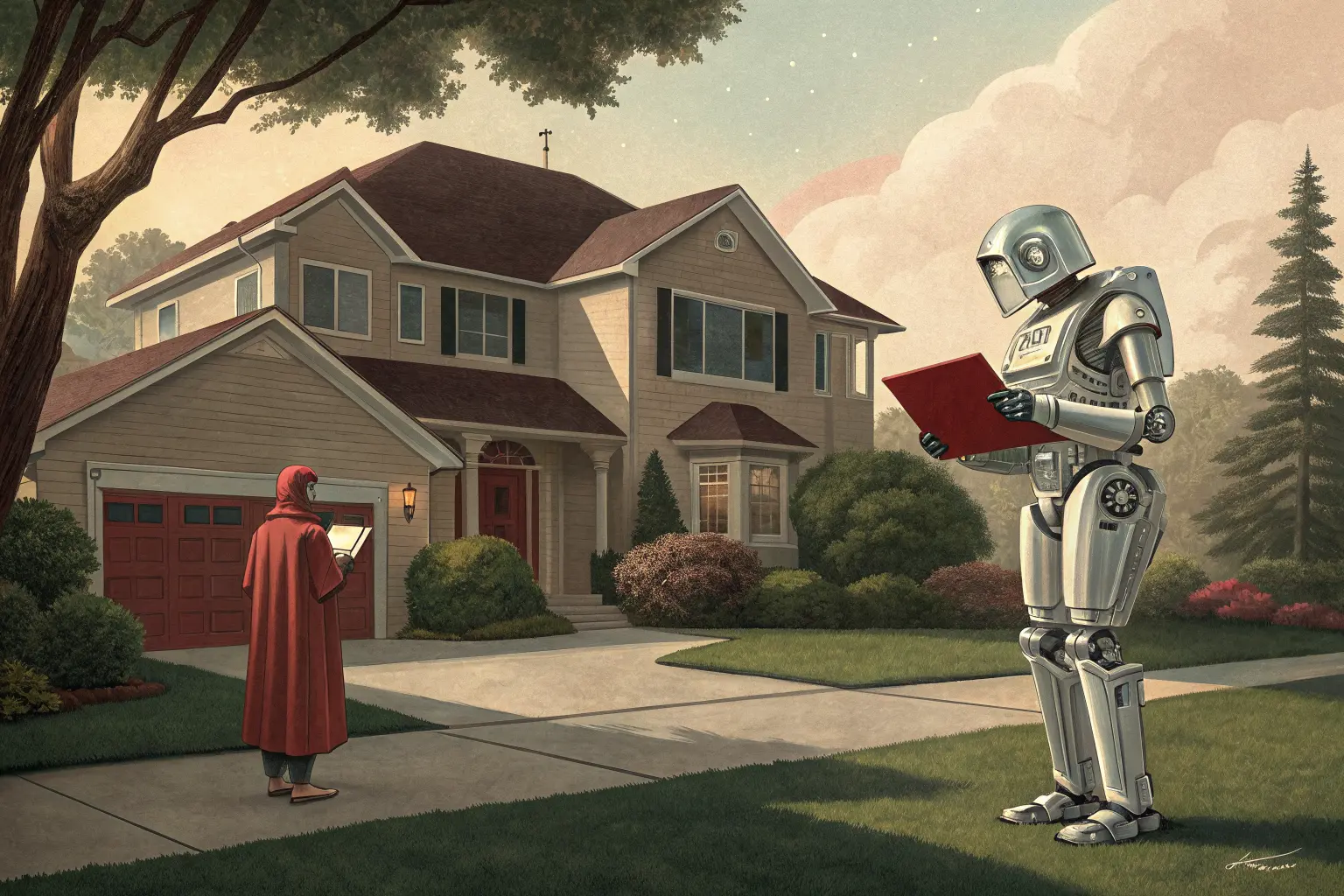
I build automation for small businesses. A few months ago I was deep in a quoting system for a window cleaning company, and the whole thing was going beautifully until I hit the part where the customer types in how many windows they have.
Stop and actually try it. How many windows does your house have? Not a guess. The number you would be willing to be charged against.
You do not know. Nobody knows. I have asked maybe thirty people since and exactly two got it right, both of whom had recently replaced them. The rest were off by a third in either direction, and every one of them answered instantly and confidently, which is worse than not answering at all.
This is the thing nobody puts in the sales deck. Automation does not fail because the model is not smart enough. It fails because the model needs an input that does not exist anywhere in the customer's head.
The AI was never the hard part. The hard part is that your customer does not have the number.
Once you see it you cannot stop seeing it. A gutter quote needs linear feet. A pressure washing quote needs square footage of concrete, itemized by surface. A lawn service needs lot size. A moving company needs cubic volume. A roofer needs pitch and squares. Every single one of those is a number the homeowner has never once had a reason to learn, and every single automated quoting tool asks for it in step one like it is asking for a phone number.
The demo works because the person running the demo types in a plausible number. Your customer types in a number they invented three seconds ago while standing in their kitchen.
Then the fun starts. You quote off the invented number, you show up, and the actual house has forty percent more windows than the quote covers. Now you are the guy standing on a driveway explaining that the price went up, before you have done any work. You have converted a warm lead into an argument. The automation did that. It did it efficiently, at scale, and it will keep doing it every day you leave it running.
I want to be clear that this is not an AI problem. It predates AI by decades. Any self-service pricing form has it. What AI did was make it much easier to build the form, so now everybody is building one, and almost none of them thought about where the number comes from.
What actually works
Three things, in the order I would try them.
First, derive the number instead of asking for it. Property records, satellite imagery and address data already know a lot about a house. Square footage, lot size and year built are public in most counties. A rough window count correlates with square footage and build era well enough to put someone in a pricing band. You are not trying to be exact, you are trying to avoid asking a question with no answer.
Second, offer ranges instead of a field. Small, medium, large, with a photo of each. People are terrible at counting and quite good at recognizing. Show a picture of a single story ranch, a two story colonial and something bigger, and let them point. You will get a more accurate answer than any number they would have typed.
Third, and this is the one people resist, let the automation stop. Build the escalation path on purpose. Over a certain size, unusual access, anything with a third story, the system says a human will confirm this and quotes nothing. That is not the automation failing. That is the automation knowing its edges, which is the only version of this that survives contact with real customers.
The system I built ended up with all three. Derive what you can, offer bands where you cannot, and hard stop into a human for the cases where a wrong number turns into a wrong price and an angry driveway conversation. It quotes less often than the version in my head did. It is also the only reason it works at all.
The question to ask
If somebody is selling you an automated quoting tool, an AI receptionist that books jobs, or anything that turns a customer conversation into a price, ask them this and watch what happens.
Where does the measurement come from?
If the answer is "the customer enters it," you now know the tool has not been used on real customers, or it has and the person selling it to you is not the one who took the angry phone calls. If the answer involves property data, ranges, photo estimation or a human confirmation step, keep listening. They have hit the wall and built around it.
That one question separates the people who have shipped from the people who have demoed. It costs you nothing to ask, and it will save you the specific and memorable experience of automating your way into a fight with a customer before you have cleaned a single window.