It Worked Until You Got Busy
You buy automation in your slow season and test it against slow-season volume. Then the busy season arrives and the whole thing falls over.
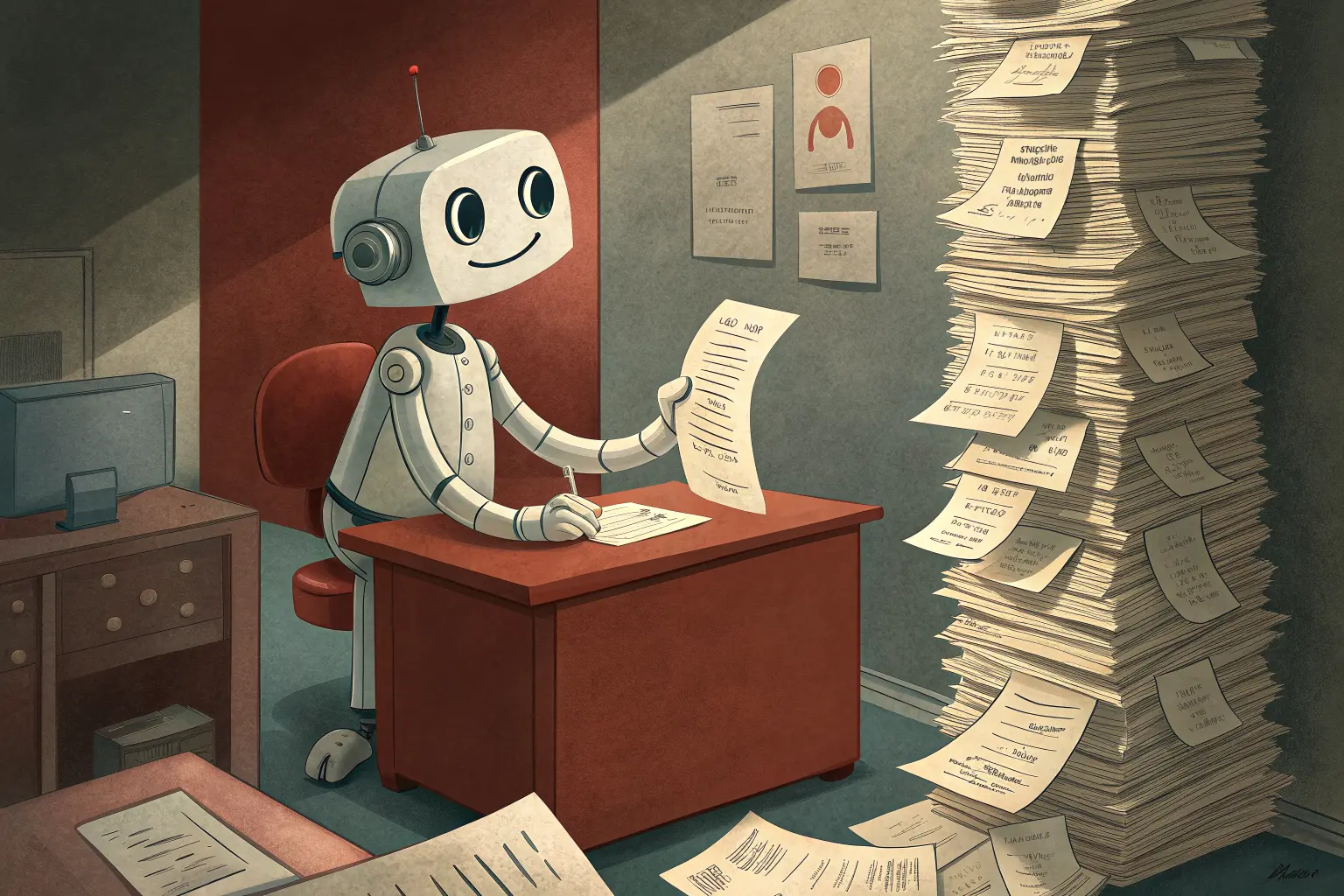
Here is a thing almost nobody tells you about small business automation. You buy it at the worst possible time to test it.
Think about when you actually have a free hour to shop for a tool, watch the demo, sign up, and set the thing up. It is never the week you are drowning. It is the quiet stretch. The window cleaner shopping in January. The landscaper in December. The accountant in June. You evaluate the automation during the calm, you feed it a calm month of work, it handles the calm beautifully, and you think, great, this works. You just tested a snowplow in July.
The whole reason you wanted it was the flood. The spring rush. The holiday weeks. The month the phone does not stop and quotes pile up faster than you can type them. That is the moment you are buying this thing for, and it is the one moment you did not and could not test.
Now here is the part that comes from building these for a living. Small business automation is almost never one clean tool. It is a chain. A form feeds a spreadsheet, the spreadsheet triggers a scenario, the scenario calls an AI, the AI writes a draft, the draft posts to your calendar or your inbox. Each link in that chain has a ceiling you did not read. A free tier that stops at a thousand records. A plan that allows a hundred runs a month. A rate limit of so many calls a minute. None of those numbers hurt you in the calm, because the calm never gets near them. They were sized for your average, and your average is a lie your busy season does not believe.
You tested a snowplow in July and decided it worked.
So the rush hits and three things happen at once. The record cap you were nowhere near fills up in the second week and new entries just stop saving. The rate limit kicks in and requests start failing, so some quotes go out and some vanish. And the weird inputs you never saw in a calm month, the double booking, the customer who pastes their whole life into the notes field, the address with no house number, all arrive on the same Tuesday and the automation chokes on every one. The system did not degrade gracefully. It picked the busiest day of your year to quietly fall apart.
Quietly is the word that costs you money. In the calm you would have noticed a missed quote within the hour, because there were six of them and you were watching. Buried under sixty, you notice three days later when the customer calls someone else. The failure and your blindness to it peak on the exact same day. That is not bad luck. That is the shape of the thing.
I built a quoting system for a window cleaning company, and the hard part was never the slow months. It was knowing that the whole point of the build was surviving the first warm week of spring, when a season of requests shows up in about nine days. So I did not test it against a good day. I dumped a brutal, overloaded day through it on purpose, in the dead of the off season, and watched for where it buckled. That is where the real work was. Not making it work. Making it not break when everything arrives at once.
A vendor demo will never do this for you, and not by accident. A demo is one request at a time, clean input, you clicking next. It is physically incapable of showing you the pile-up, which is the only thing you actually needed to see. The sticker price is for the snowplow in July. The real test is the storm.
So before you sign anything, ask one question and make them answer in writing. What happens at five times my normal weekly volume, all in one week? Not my average. My peak. Get the actual numbers: the record cap, the monthly run limit, the rate limit per minute, and what the system does when it hits one. Does it queue the overflow and catch up, or does it silently drop it on the floor? If the salesperson does not know, that is your answer, and the answer is that you are the one who will find out, in April, for free.
And then, in your own slow season, run the storm yourself. Take a real busy day from last year, the ugliest one you can find, and shove the whole thing through the tool in one sitting. If it holds, you bought a snowplow. If it buckles, you found out in the calm, which is the only good time to find out anything.