Built to Be Bought
The AI tool you're wiring into your business isn't trying to serve you for ten years. It's trying to sell itself in two.
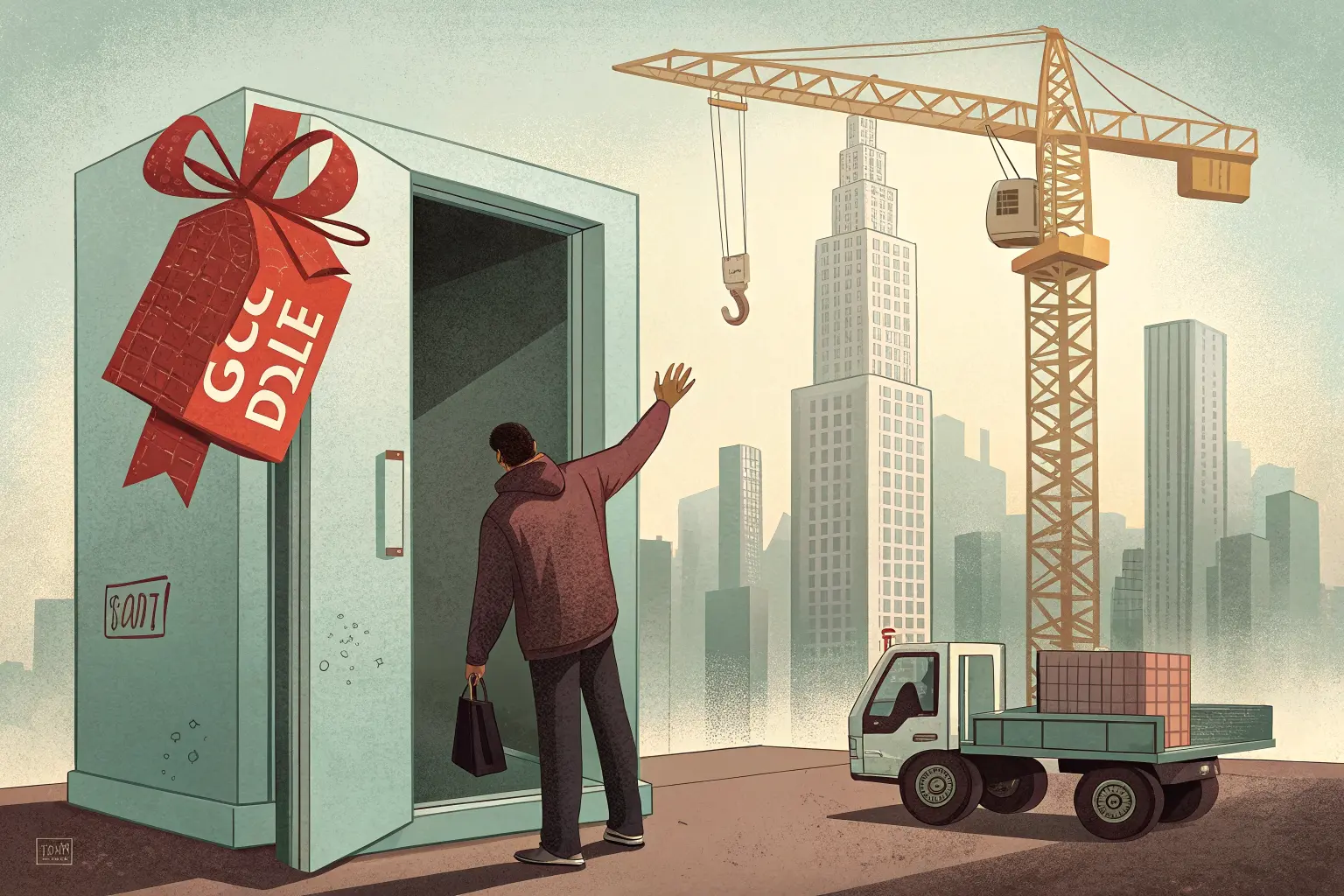
A contractor I do work for ran his whole schedule on one little app for four years. Last spring he got the email. The one that opens with "exciting news" and lands on the word "acquired." A bigger platform had bought the small tool he actually used. Great for them. Six weeks later the one feature he cared about, the automatic text that sent customers a confirmation and an arrival window, got folded into a pricier "suite" he never asked for. His bill went up. His tool got worse. He didn't do anything wrong. He just bet his operations on a company whose real product was itself.
That's the part nobody mentions when they demo the slick AI tool with the perfect onboarding and the founder who answers support tickets personally. The founder answers your tickets because the company is eighteen months old and needs to look like it loves you. It needs to look lovable because being loved by a few thousand small businesses is how you get bought. You are not the customer. You're the traction slide.
You are not the customer. You're the traction slide.
Most of these companies are not built to make money from you. They're built to grow fast enough to get acquired or raise the next round. The agentic AI segment is compounding at something like 44% a year, and that number gets quoted at you like it's a promise. It isn't a promise to your business. It's a promise to their investors, and the two are frequently opposites. The fastest way to juice revenue right before a sale is to take the thing everybody depends on and move it behind a bigger plan. You've been the lever in that move and didn't know it.
When I build an automation for a five-person company, the single most important decision I make is not which AI model to use. It's what the thing sits on. Because I'm not going to be there in two years babysitting it, and neither is the vendor's chatty founder. So before I wire anything to anybody, I ask one question: if this company vanishes in twelve months, how long does it take me to rebuild this somewhere else? If the answer is "an afternoon," I'll build it. If the answer is "we start over," I won't. Not because the tool is bad. Because the tool is temporary and the business isn't.
This flips the advice you usually hear. "You can always export your data" is not the test. I've argued before that getting your data out is harder than they say, but even a clean export doesn't save you when your entire workflow is welded to one vendor's proprietary way of doing things. Data is portable. Process is not. You can export a spreadsheet. You cannot export four years of muscle memory and the fourteen little automations that all quietly assumed that one tool would always be there.
So here's the thing to ask the next vendor, and watch their face while they answer: "If you get acquired, what happens to this feature and this price?" The honest ones tell you they can't promise. The ones to avoid tell you it'll never happen. Neither answer protects you, but the question tells you they understand the game they're in, and that they expect to play it. Then do the boring thing. Favor automations built on dull, replaceable parts, a database you control, a payment processor that's been around a decade, email that works the same everywhere, over the one glittering startup whose whole pitch is that nobody else does what they do. "Nobody else does this" is not a feature. It's a dependency with a countdown on it.
And if you have to build on the hot new thing, build on it like it's a rental, not a house. Keep the logic in a form you can move. Keep a plain-language copy of what the automation actually does, step by step, so that when the acquisition email lands, and it will land, you're rebuilding a known thing somewhere else instead of reverse engineering your own business at the worst possible moment.
I sell this stuff, so hear the quiet part from someone with no reason to say it: the tool is not loyal to you. It was never going to be. It was built to be bought, and the day it is, you find out exactly how much of your operation you handed to a stranger who just cashed the check and walked.
Pick your vendors like they're going to leave. The good ones will respect the question. The rest were going to leave anyway.